
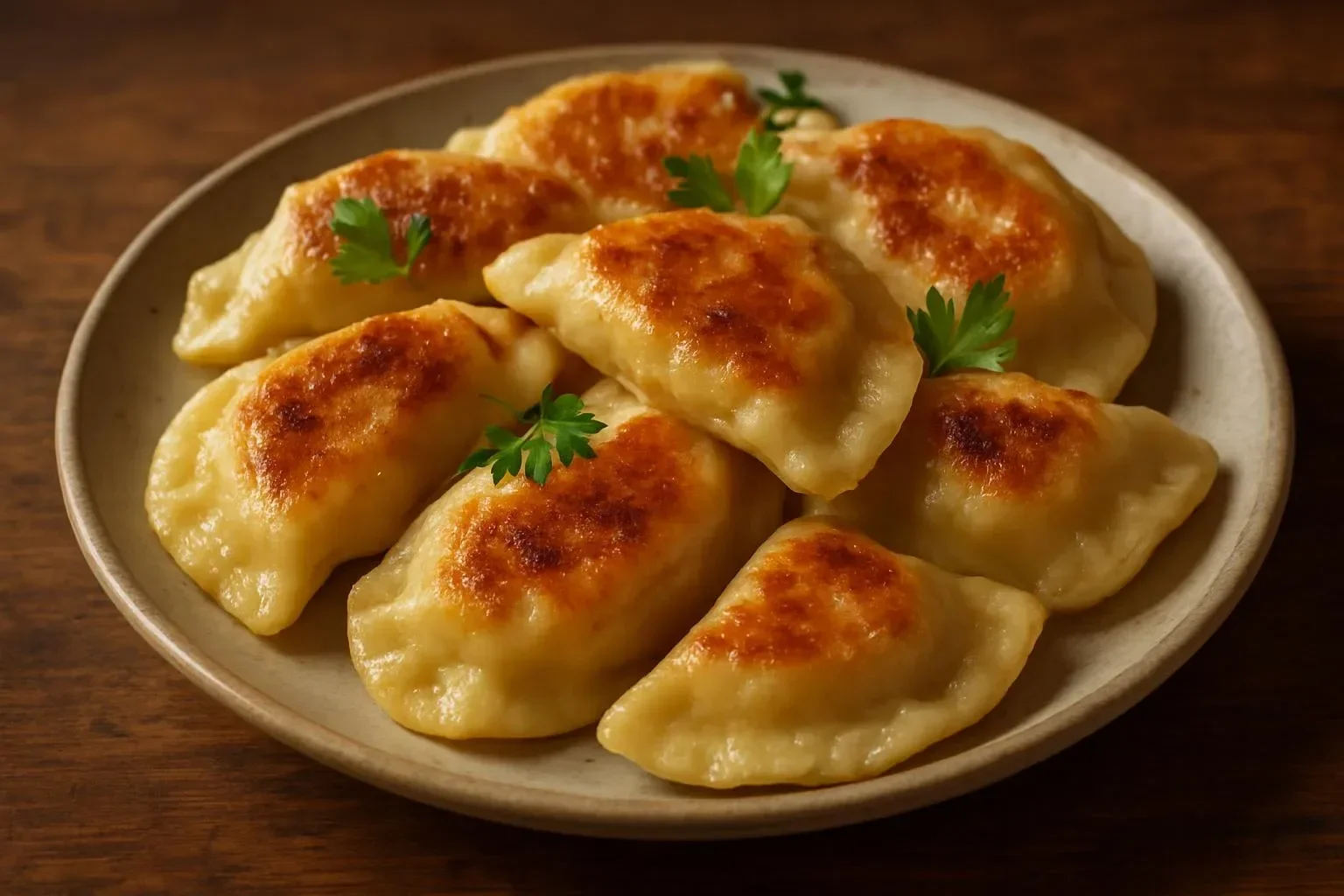
I love making gluten free perogies because they bring the comfort of big, pillowy dumplings without the gluten drama. This recipe yields tender dough and a creamy potato-cheddar filling that hold up well when boiled and pan-fried. I’ve tested variations with different flour blends and techniques to find a repeatable, home-cook-friendly method.
Why Make This Recipe
- Classic comfort flavor: fluffy potato filling with a soft, slightly chewy dough that browns beautifully in butter.
- Family friendly and versatile: make them savory for dinner or sweet with fruit for dessert.
- Make-ahead convenience: dough and filling freeze well, so you can batch-make and cook later.
- Better for sensitive stomachs: naturally gluten free when you use a reliable flour blend and xanthan gum.
- Personal insight: I love this recipe because the pan-fried edges get crispy while the inside stays creamy — it’s small effort for big payoff. Also pair with a simple dessert like 5-Ingredient Gluten-Free Pumpkin Pudding for an easy full meal.
Recipe Overview
- Prep time: 45 minutes (includes filling and dough)
- Cook time: 10–15 minutes to boil plus 5–8 minutes to pan-fry per batch
- Total time: 1 hour 10 minutes
- Servings: about 4–6 (makes ~24 perogies)
- Difficulty: Medium — dough handling and sealing are the main skills
- Cooking method: boil then optionally pan-fry in butter or oil for color and texture
My Experience Making This Recipe
I tested this recipe with three different gluten-free flour blends and settled on a blend with 1:1 starch-to-flour balance for pliability. The biggest discovery was warming the mashed potatoes slightly before folding into the filling — it gives a silkier texture and helps the filling bind without overworking the dough.
How to Make Gluten Free Perogies
Start by making a smooth, slightly sticky dough using a gluten-free all-purpose blend and a touch of xanthan gum; rest it 20–30 minutes to hydrate. Meanwhile, boil and mash potatoes, fold in sautéed onions, shredded cheddar, salt, and a little sour cream to taste. Roll dough to about 1/8-inch thickness, cut 3-inch circles, fill with 1–2 tablespoons of filling, pinch to seal, then boil gently until they float (about 2–3 minutes). Finish in a hot skillet with butter or oil for 2–3 minutes per side for color and a crisp edge.
Expert Tips for Success
- Use a reliable gluten-free 1:1 all-purpose flour with xanthan gum included, or add 1/2 teaspoon xanthan per 2 cups flour if absent.
- Rest the dough covered for at least 20 minutes so the flours hydrate — this reduces tearing when you roll.
- Keep the filling cool but pliable; warm mashed potatoes bind better than cold, but avoid hot filling that can melt the dough.
- Boil in gently simmering water (about 190–200°F / 88–93°C) so the perogies don’t burst from vigorous rolling water.
- Use a pastry brush or your fingertip dipped in water to moisten edges before sealing; press firmly and crimp to prevent leaks.
How to Serve Gluten Free Perogies
- Classic: top with melted butter, caramelized onions, and a dollop of sour cream or plain yogurt.
- Make it a meal: serve with sautéed mushrooms and a crisp green salad for contrast.
- Party platter: pan-fry until golden and serve with multiple dipping sauces — herbed sour cream, mustard, or a spicy pepper relish.
- Occasion tip: perfect for holiday spreads or a weekend family cooking session — kids can help fill and pinch.
Storage and Reheating Guide
- Refrigerator: store cooked perogies in an airtight container for up to 3 days. Reheat in a skillet over medium heat with a little butter to restore crispness.
- Freezing (raw): freeze assembled, uncooked perogies on a tray until solid (about 1–2 hours), then transfer to freezer bags for up to 3 months. Cook from frozen by boiling an extra 1–2 minutes.
- Freezing (cooked): freeze cooked, cooled perogies on a tray, then bag; reheat from frozen in a 350°F oven (175°C) for 10–15 minutes or pan-fry to crisp.
- Containers: use airtight, freezer-safe bags or glass containers to avoid freezer burn and flavor transfer.
Recipe Variations
- Dairy-free: replace butter with olive oil or vegan butter and use dairy-free cheese or nutritional yeast in the filling.
- Vegan: use mashed potato mixed with sautéed onion and crumbled tofu or cooked lentils for protein; bind with a flax “egg” if needed.
- Cheesy potato & bacon: add crisp cooked bacon or smoked ham to the filling for extra savoriness.
- Sweet perogies: fill with sweetened farmer’s cheese or mashed fruit (apricot, blueberry) and serve with cinnamon sugar and a drizzle of maple.
Nutritional Highlights
- Good source of carbohydrates and satiety from potatoes; cheese adds protein and calcium.
- Modify portion sizes: two to three perogies make a reasonable entrée portion for most adults.
- Allergen info: naturally gluten free when using a certified gluten-free flour blend, but contains dairy if you use cheese and butter — offer dairy-free swaps for lactose-intolerant guests.
Troubleshooting Common Issues
- Dough cracks when rolling: let dough rest longer and keep it slightly tacky; roll between parchment to avoid tearing.
- Perogies fall apart in boiling water: ensure edges are well-sealed and use gentle simmer (190–200°F) rather than a rolling boil.
- Filling too dry: add a tablespoon of sour cream, melted butter, or a splash of milk to moisten and bind the potatoes.
Frequently Asked Questions
Q: Can I make the dough ahead and refrigerate it?
A: Yes — wrap the dough tightly and refrigerate up to 24 hours. Bring it to room temperature for 20–30 minutes before rolling so it’s easier to work with.
Q: How do I prevent perogies from sticking together after boiling?
A: Drain well and toss lightly in butter or oil immediately after boiling, or pan-fry in batches. Using a slotted spoon to transfer them and spreading them on a single layer briefly helps.
Q: What flour blends work best for gluten-free perogies?
A: Look for a blend with a mix of rice flour, potato starch, and tapioca or corn starch. If your blend lacks xanthan gum, add 1/2 teaspoon per cup of flour to improve elasticity.
Q: Can I freeze perogies before cooking?
A: Absolutely — freeze assembled, uncooked perogies on a tray until solid, then store in freezer bags up to 3 months. Boil from frozen, adding 1–2 minutes to cook time.
Conclusion
For additional tested gluten-free dough methods and variations, see this practical guide to making gluten free pierogi: Gluten Free Pierogi. If you want an authentic, beloved recipe from a longtime gluten-free baker, check out Gluten Free Pierogi Recipe – authentic & delicious from gfJules. For dough-focused techniques and tips from a Polish perspective, visit Gluten-Free Pierogi Dough – Polish Housewife. If you prefer a video walkthrough, this step-by-step demonstration is very helpful: Gluten Free Perogies – Just Like Grandma’s (Video) – Faithfully Gluten Free. For another tested family-friendly approach, try the recipe and notes at Gluten-Free Pierogi – Mama Knows Gluten Free.
Print
Gluten Free Perogies
Tender, gluten-free dumplings filled with creamy potato and cheddar, perfect for boiling and pan-frying.
- Total Time: 70 minutes
- Yield: 24 perogies 1x
Ingredients
- 2 cups gluten-free all-purpose flour
- 1/2 teaspoon xanthan gum (if not included in flour blend)
- 1 cup potatoes, boiled and mashed
- 1/2 cup shredded cheddar cheese
- 1/4 cup sautéed onions
- Salt to taste
- 2 tablespoons sour cream (optional)
- Butter or oil for pan-frying
Instructions
- Prepare a smooth, slightly sticky dough with gluten-free flour and xanthan gum; rest for 20–30 minutes.
- Boil and mash potatoes, then fold in sautéed onions, cheddar, salt, and sour cream.
- Roll dough to 1/8-inch thickness and cut into 3-inch circles.
- Fill each circle with 1–2 tablespoons of filling and pinch to seal.
- Boil perogies in gently simmering water until they float (about 2–3 minutes).
- Pan-fry in a hot skillet with butter or oil for 2–3 minutes per side for a crisp edge.
Notes
Ensure the filling is cool but pliable, and use a pastry brush to moisten edges for sealing.
- Prep Time: 45 minutes
- Cook Time: 15 minutes
- Category: Side Dish
- Method: Boiling and Pan-Frying
- Cuisine: Eastern European
- Diet: Gluten-Free
Nutrition
- Serving Size: 2-3 perogies
- Calories: 250
- Sugar: 1g
- Sodium: 300mg
- Fat: 8g
- Saturated Fat: 4g
- Unsaturated Fat: 3g
- Trans Fat: 0g
- Carbohydrates: 35g
- Fiber: 3g
- Protein: 6g
- Cholesterol: 15mg