
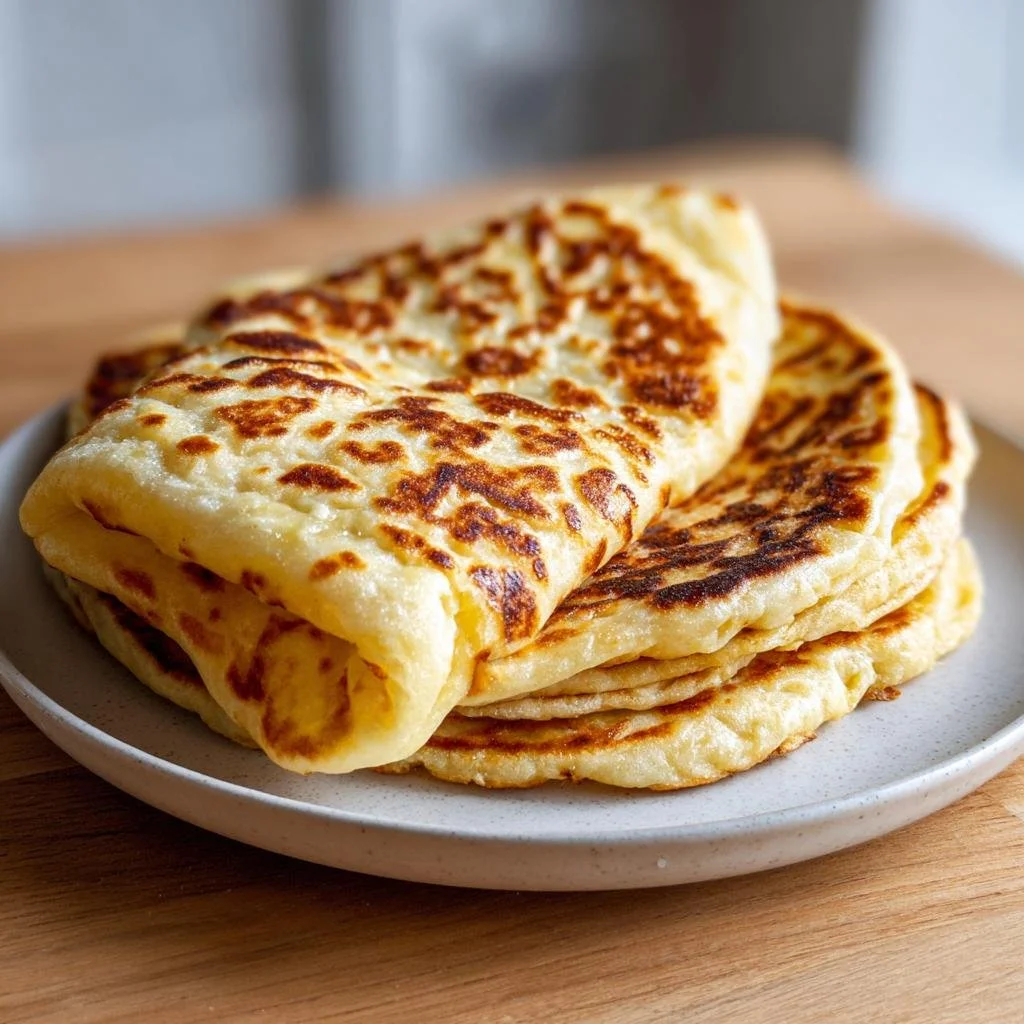
I’ve been making Simple Potato Starch Flatbread for quick weeknight meals and last-minute wraps. It’s light, pliable, and cooks in minutes—perfect when you need a gluten-free bread substitute. After several tests, I can guide you to a foolproof, tender flatbread every time. Try a similar almond-flour option if you want another quick gluten-free flatbread.
Why Make This Recipe
- Fast: dough comes together in 5 minutes and cooks in under 10, so you can have fresh flatbreads in about 20 minutes.
- Simple ingredients: mostly potato starch, water, oil, and salt—pantry-friendly and budget-wise.
- Texture: thin, tender, slightly chewy, and flexible—great for wraps or dipping. I love it because it stays soft even after cooling.
- Gluten-free and neutral-flavored, so it pairs with savory or sweet fillings.
- Versatile: use it for tacos, sandwiches, or as a side to soups; it adapts well to different cuisines. Also check a chickpea-based option if you want a higher-protein alternative: chickpea flatbread.
Recipe Overview
- Prep time: 5 minutes
- Cook time: 10–12 minutes (for 6 small flatbreads)
- Total time: 15–20 minutes
- Servings: makes 6 (about 6-inch) flatbreads
- Difficulty: Easy
- Method: Mix dry potato starch with boiling water, form a pliable dough, divide, flatten, and cook in a hot nonstick skillet over medium heat. For a similar quick approach with different flours, see this 5-ingredient flatbread.
My Experience Making This Recipe
My first batches were crumbly until I adjusted water temperature and resting time. I learned that using boiling water and a short rest gives a smooth, cohesive dough. Once I dialed in skillet heat and thickness, the breads cooked evenly with light browning.
How to Make Simple Potato Starch Flatbread
Combine 1 cup potato starch, 1/2 teaspoon salt, 1 tablespoon olive oil, and 1/2 cup boiling water. Stir with a spoon until it comes together, then knead briefly on a lightly starch-dusted surface until smooth (about 1 minute). Divide into six balls, flatten with your hands or a rolling pin between parchment to roughly 5–6 inches wide and 1/8–1/16 inch thick. Heat a nonstick skillet over medium (the surface should read about 325–350°F / 160–175°C if you use an infrared thermometer). Cook each flatbread 1–2 minutes per side until lightly brown spots appear and the bread feels springy. Expect some puffing; press gently with a spatula to cook pockets through. Let rest under a clean towel to stay soft before serving.
Expert Tips for Success
- Use boiling water: it gelatinizes starch and binds the dough. Pour water over the starch, don’t add cold water.
- Measure potato starch by weight for consistency — 1 cup ≈ 120 g works well.
- Keep thickness even: roll to about 1–2 mm for pliable, foldable flatbreads. Too thick gives doughy centers.
- Control pan heat: medium is key. If the pan smokes, it’s too hot and the outside will burn before the inside cooks.
- For buttery flavor, brush with melted butter or ghee off-heat. Baking tools that help: silicone baking mat for rolling and a good nonstick skillet or cast-iron seasoned well—techniques from laminated doughs like a gluten-free croissant aren’t needed here, but a quality pan matters.
How to Serve Simple Potato Starch Flatbread
- Use as a wrap for grilled chicken, hummus, and arugula for an easy lunch. See pairing ideas with gluten-free rolls like these sweet potato rolls.
- Serve warm alongside stews or curries—use them to scoop instead of cutlery.
- Make mini pizzas: top, bake briefly (400°F/200°C for 5–7 minutes), and finish under a broiler for color.
- For presentation, stack with parchment between breads and fan on a plate; sprinkle with sesame seeds or chopped herbs.
Storage and Reheating Guide
- Short-term: store cooled flatbreads in an airtight container or resealable bag for up to 3 days at room temperature.
- Refrigeration: keep for up to 5 days in the fridge in an airtight container. Warm gently before serving.
- Freezing: stack with parchment between each flatbread, place in a freezer bag, and freeze up to 3 months. Thaw at room temperature.
- Reheat: warm in a dry nonstick skillet over low-medium heat 30–60 seconds per side, or microwave covered for 15–25 seconds per flatbread. For best texture, reheat briefly in a 350°F (175°C) oven wrapped in foil for 5–7 minutes.
Recipe Variations
- Herb flatbread: add 1 tablespoon chopped fresh parsley or cilantro to the dough for bright flavor.
- Garlic butter: brush with garlic-infused olive oil after cooking.
- Dairy-free: this recipe is naturally dairy-free; use olive oil or coconut oil for different flavors.
- Higher-protein: replace up to 20% of the potato starch with chickpea flour and increase water by 1–2 teaspoons; expect a firmer texture.
Nutritional Highlights
- Low in fiber and protein compared with whole-grain breads; pair with protein-rich fillings to balance a meal.
- Gluten-free: suitable for people with celiac disease or gluten sensitivity.
- Allergen info: contains no gluten or dairy by default, but check cross-contamination with potato starch brands if needed. Portion guidance: one flatbread ~90–120 calories depending on oil amount.
Troubleshooting Common Issues
- Flatbread cracks when folding: dough was too dry or rolled too thin. Fix by kneading in 1–2 teaspoons warm water and letting it rest 5 minutes.
- Raw center after browning outside: pan too hot or flatbread too thick. Lower heat and flatten dough to 1–2 mm.
- Sticking to pan: use a well-seasoned nonstick or cast-iron skillet and ensure the pan is properly preheated; a very light brush of oil can help.
Frequently Asked Questions
Q: Can I make the dough ahead and refrigerate it?
A: Yes. Wrap the dough ball tightly in plastic wrap and refrigerate up to 24 hours. Bring to room temperature and knead briefly before dividing and rolling. Cold dough is tougher to shape.
Q: Can I substitute cornstarch or tapioca starch for potato starch?
A: Tapioca can work but yields a chewier, stretchier result and may require slight water adjustments. Cornstarch tends to be drier and less elastic; outcomes vary. Potato starch gives the best tender, neutral texture.
Q: How thin should I roll the flatbreads?
A: Aim for 1–2 mm (about 1/16 inch). That thickness cooks quickly and stays flexible; thicker is fine but will need slightly longer cooking and may be less pliable.
Q: Will these brown nicely without oil in the pan?
A: They can brown in a dry nonstick pan if the surface is hot. A light brush of oil on the pan or the flatbread adds color and flavor, but it’s not strictly necessary if you watch the heat.
Conclusion
If you want a slightly different single-ingredient take, check out The Ultimate ONE Ingredient Potato Flatbread for inspiration and comparison.
Print
Simple Potato Starch Flatbread
A quick and easy gluten-free flatbread made with potato starch, perfect for wraps, dips, and sides.
- Total Time: 15 minutes
- Yield: 6 servings 1x
Ingredients
- 1 cup potato starch
- 1/2 teaspoon salt
- 1 tablespoon olive oil
- 1/2 cup boiling water
Instructions
- In a bowl, combine potato starch, salt, and olive oil.
- Pour boiling water over the dry ingredients and stir until combined.
- Knead briefly on a lightly starch-dusted surface until smooth (about 1 minute).
- Divide the dough into six balls and flatten them to about 5–6 inches wide.
- Heat a nonstick skillet over medium heat (325–350°F / 160–175°C).
- Cook each flatbread for 1–2 minutes on each side until lightly browned and springy.
- Let rest under a clean towel to stay soft before serving.
Notes
For a buttery flavor, brush with melted butter or ghee after cooking. Can be used for tacos, sandwiches, or mini pizzas.
- Prep Time: 5 minutes
- Cook Time: 10 minutes
- Category: Side Dish
- Method: Stovetop Cooking
- Cuisine: Global
- Diet: Gluten-Free
Nutrition
- Serving Size: 1 flatbread
- Calories: 100
- Sugar: 0g
- Sodium: 200mg
- Fat: 2g
- Saturated Fat: 0g
- Unsaturated Fat: 1g
- Trans Fat: 0g
- Carbohydrates: 22g
- Fiber: 1g
- Protein: 1g
- Cholesterol: 0mg