
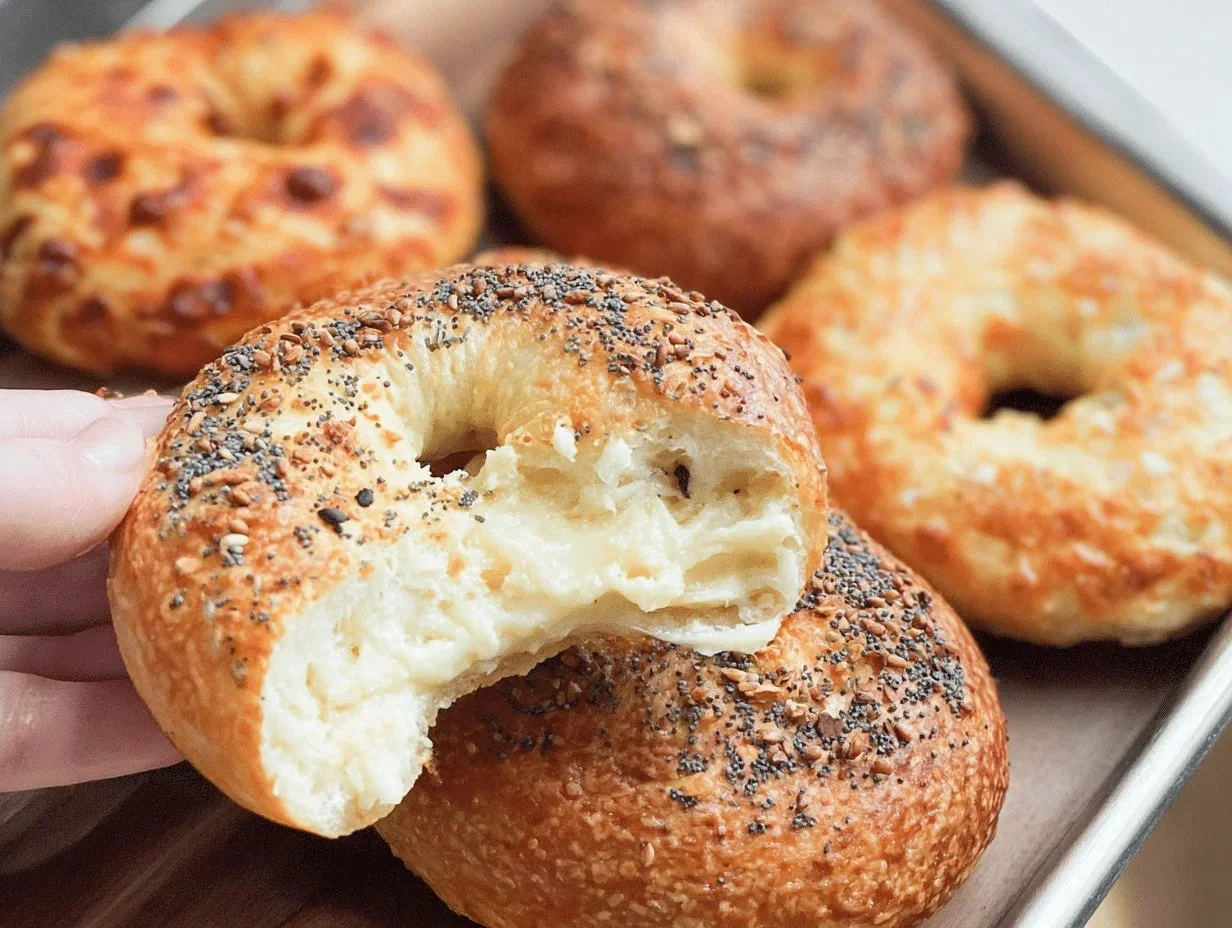
Soft & Chewy Gluten-Free Bagels are a game-changer if you miss dense, chewy bagels but avoid gluten. I developed this straightforward method after testing several flours and boiling times to get that classic chew without the wheat. For a similar starting point I adapted ideas from this easy bagel method I liked: Easy gluten-free bagels recipe.
Why Make This Recipe
- You get the familiar chewy texture of a classic bagel without gluten — great for breakfast sandwiches or toasting.
- The recipe uses pantry-friendly gluten-free flour blends and minimal specialty ingredients.
- It freezes and reheats well, so you can bake a batch and eat bagels all week.
- Quick technique: a brief boil before baking seals the crust for chew and shine.
- Personal insight: I love this recipe because the first bite still has that dense, slightly glossy bite that takes me back to my favorite deli mornings.
Also try pairing your baking day with other quick bakes like this oat loaf for variety: easy gluten-free oat quick bread.
Recipe Overview
- Prep time: 20 minutes (plus 45–60 minutes proofing)
- Cook time: 20–25 minutes (baking) + 1 minute per side boiling
- Total time: about 1 hour 30 minutes (including proofing)
- Servings: makes 8 medium bagels (about 95–120 g each)
- Difficulty: Easy (requires basic shaping and a quick boil)
- Method: Mix a yeast-leavened gluten-free dough, shape into rings, boil briefly in simmering water with baking soda, then bake at 425°F (220°C).
If you want a quick comparison to other gluten-free flatbreads or breads, this fits nicely between a soft loaf and an enriched roll like in these flatbread notes: 5-ingredient gluten-free flatbread.
My Experience Making This Recipe
I tested this recipe across several gluten-free flour blends and found a 50/50 mix of all-purpose GF flour and a bit of sweet rice flour gave the best chew. The discovery: a short proof (45–60 minutes) at warm room temperature yields a lighter crumb than overproofing. My oven spring improves when I bake directly on a preheated baking stone or heavy sheet.
How to Make Soft & Chewy Gluten-Free Bagels
Ingredients (makes 8):
- 400 g (3 1/4 cups) gluten-free all-purpose flour blend (measured by weight)
- 100 g (3/4 cup) sweet rice flour
- 10 g (2 tsp) xanthan gum (omit if your blend contains it)
- 9 g (1 packet / 2 1/4 tsp) active dry yeast
- 30 g (2 tbsp) granulated sugar or honey
- 10 g (2 tsp) salt
- 300–325 ml (1 1/4–1 1/3 cups) warm water (105–115°F / 40–46°C)
- 1 large egg + 1 tbsp water for egg wash (or use aquafaba for egg-free)
- 1 tbsp baking soda for boiling water
- Optional toppings: sesame seeds, poppy seeds, coarse salt, everything seasoning
Equipment:
- Kitchen scale (recommended for accuracy) or measuring cups
- Stand mixer with dough hook (or sturdy bowl and spoon)
- Large pot for boiling, slotted spoon, baking sheet or pizza stone, parchment paper
Steps:
- Bloom the yeast: Stir yeast, sugar, and 60 ml warm water in a small bowl and let sit 5–10 minutes until foamy.
- Mix dry: In the mixer bowl combine gluten-free flour, sweet rice flour, xanthan gum, and salt.
- Form dough: Add yeast mixture, remaining warm water, and mix on low with dough hook 3–5 minutes until a sticky, cohesive dough forms. Add up to 25 ml more water if the dough is dry; it should be tacky but shapeable.
- First rest: Cover the bowl with plastic and let dough rest in a warm spot 45–60 minutes; it should puff slightly but won’t double like wheat dough.
- Shape: Divide into 8 equal pieces (about 95–120 g each). Roll into balls, then either poke a hole through the center and stretch into a ring, or roll into a short rope and join ends. Place on parchment-lined tray.
- Preheat oven: 425°F (220°C). If using a pizza stone, place it in the oven to preheat.
- Boil: Bring a large pot of water to a gentle simmer. Add 1 tbsp baking soda. Boil each bagel 45–60 seconds per side — this gives a good chewy crust. Use a slotted spoon to transfer back to the tray.
- Egg wash & top: Brush with beaten egg + water and add toppings.
- Bake: Bake 18–22 minutes until deep golden and firm. Rotate tray halfway if needed. Cool on a rack — bagels firm up as they cool.
For more on adapting cheesecake or enriched dough techniques to gluten-free baking, see this resource: amazing gluten-free cheesecake.
Expert Tips for Success
- Weigh your flours: Gluten-free flours vary wildly; using a kitchen scale (grams) gives consistent texture.
- Use a warm but not hot liquid: 105–115°F (40–46°C) wakes the yeast without killing it, which helps predictable rise.
- Don’t over-hydrate: A slightly tacky dough shapes best; add extra water in tablespoons only.
- Boil for chew and shine: 45–60 seconds per side in simmering water with baking soda gives the classic crust and internal chew.
- Bake on a preheated stone or heavy sheet: this gives better bottom crispness and oven spring than a cold pan.
If you like branching into more gluten-free bread options, explore a category of gluten-free bread recipes here: gluten-free bread recipes.
How to Serve Soft & Chewy Gluten-Free Bagels
- Classic breakfast: split and toast, schmear with cream cheese and smoked salmon, or use dairy-free cream cheese for a vegan option.
- Sandwiches: use them for egg-and-cheese breakfast sandwiches or deli-style turkey and mustard for lunch.
- Brunch platter: slice into rounds and serve with butter, jams, sliced tomatoes, and capers for a sharing spread.
- Presentation tip: warm bagels 3–4 minutes under a broiler or in a toaster oven, then sprinkle finishing salt or seeds right after egg wash for glossy, attractive tops.
For a quick, complementary flatbread or side item, you might also like this 5-ingredient flatbread technique: effortless 5-ingredient gluten-free flatbread.
Storage and Reheating Guide
- Short-term: Store at room temperature in a paper bag for up to 24 hours, then move to an airtight container in the refrigerator for up to 3 days.
- Freezing: Slice cooled bagels in half, wrap individually in plastic wrap and place in a freezer bag. Freeze up to 3 months.
- Reheating from frozen: Toast directly from frozen in a toaster or toaster oven on medium until hot (about 3–5 minutes). For whole frozen bagels, bake at 350°F (175°C) for 12–15 minutes wrapped in foil to heat through.
- Avoid microwaving alone for long — it makes gluten-free bagels rubbery. If you must microwave, do short 15–20 second bursts then crisp in a hot skillet.
Recipe Variations
- Dairy-free: Use aquafaba (3 tbsp) in place of the egg wash and a plant milk (unsweetened almond or oat) in the dough.
- Egg-free: Replace the egg in dough with a flax egg (1 tbsp ground flax + 3 tbsp water) and use aquafaba for gloss.
- Whole-grain boost: Replace up to 25% of the GF all-purpose blend with sorghum or buckwheat flour for more flavor and fiber; increase water by 1–2 tbsp.
- Everything or flavored bagels: Add 1–2 tbsp minced roasted garlic or 2 tbsp chia seeds into the dough, or top with everything seasoning right after the egg wash.
Nutritional Highlights
- Lower in gluten: Suitable for those with celiac disease or non-celiac gluten sensitivity if made with certified gluten-free ingredients.
- Moderate carbs and customizable fiber: Using a blend with sorghum or adding seeds raises fiber and micronutrients.
- Allergens: Contains eggs (unless you use the egg-free options), and may contain xanthan gum; always check flour blend labels for soy, milk, or nut traces. Portion guide: one medium bagel is typically 300–400 calories depending on toppings.
Troubleshooting Common Issues
- Dense, heavy bagels: Likely underproofed or overworked dough. Let dough rest 45–60 minutes in a warm spot and avoid excessive mixing after shaping.
- Flat or misshapen rings: Dough may be too wet or not shaped firmly. Add a dusting of flour and shape into tighter rings, or use the rope-and-join method for stronger seams.
- Soggy bottom: Bake on a preheated stone or a hot sheet; make sure your oven is fully preheated to 425°F (220°C) before baking.
Frequently Asked Questions
Q1: Can I use instant yeast instead of active dry yeast?
A1: Yes. Reduce the water temperature slightly (100–110°F / 38–43°C) and you can add instant yeast directly to the dry ingredients. The timing is similar; proofing still helps flavor so allow 45–60 minutes.
Q2: My bagels exploded or split when baking — why?
A2: Splitting often means the outer skin dried too much before oven spring or seams weren’t sealed. Ensure you boil, then brush quickly with egg wash and bake immediately. Avoid letting shaped bagels sit uncovered for long.
Q3: How do I make a chewier interior?
A3: Use some sweet rice flour or tapioca starch (10–25% of the flour weight) to boost chew, and don’t overproof. The short, hot bake after a proper boil helps set the shiny, chewy crust.
Q4: Can I halve the recipe or make mini bagels?
A4: Yes. Halve all ingredients proportionally. For mini bagels, divide into smaller portions (30–50 g each) and reduce baking time to 12–15 minutes; boiling time can be 30–45 seconds per side.
Conclusion
If you want another tested gluten-free bagel approach to compare techniques and ingredient ratios, check this clear, practical guide: Easy Gluten Free Bagels – The Loopy Whisk. It pairs well with the tips above when you’re refining chew and crust.
Print
Soft & Chewy Gluten-Free Bagels
Enjoy chewy, gluten-free bagels perfect for breakfast or sandwiches, made with simple ingredients and a quick boiling technique for that classic crust.
- Total Time: 90 minutes
- Yield: 8 servings 1x
Ingredients
- 400 g (3 1/4 cups) gluten-free all-purpose flour blend
- 100 g (3/4 cup) sweet rice flour
- 10 g (2 tsp) xanthan gum (omit if your blend contains it)
- 9 g (1 packet / 2 1/4 tsp) active dry yeast
- 30 g (2 tbsp) granulated sugar or honey
- 10 g (2 tsp) salt
- 300–325 ml (1 1/4–1 1/3 cups) warm water (105–115°F / 40–46°C)
- 1 large egg + 1 tbsp water for egg wash (or aquafaba for egg-free)
- 1 tbsp baking soda for boiling water
- Optional toppings: sesame seeds, poppy seeds, coarse salt, everything seasoning
Instructions
- Stir yeast, sugar, and 60 ml warm water in a small bowl and let sit 5–10 minutes until foamy.
- In a mixer bowl, combine gluten-free flour, sweet rice flour, xanthan gum, and salt.
- Add yeast mixture, remaining warm water, and mix on low with dough hook for 3–5 minutes until a sticky, cohesive dough forms. Adjust with more water if needed.
- Cover the bowl with plastic and let dough rest in a warm spot for 45–60 minutes until puffed.
- Divide dough into 8 equal pieces and roll into balls, shape into rings, and place on a parchment-lined tray.
- Preheat oven to 425°F (220°C), placing a pizza stone inside if using.
- Bring a large pot of water to a gentle simmer, add baking soda, and boil each bagel for 45–60 seconds per side. Transfer back to the tray.
- Brush with egg wash and add toppings.
- Bake for 18–22 minutes until deep golden and firm. Cool on a rack.
Notes
For best results, weigh your flours and use a kitchen scale for accuracy. Avoid over-hydrating the dough and ensure water temperature is correct for yeast activation.
- Prep Time: 20 minutes
- Cook Time: 25 minutes
- Category: Breakfast
- Method: Boiling and Baking
- Cuisine: American
- Diet: Gluten-Free
Nutrition
- Serving Size: 1 bagel
- Calories: 350
- Sugar: 5g
- Sodium: 400mg
- Fat: 6g
- Saturated Fat: 1g
- Unsaturated Fat: 4g
- Trans Fat: 0g
- Carbohydrates: 70g
- Fiber: 3g
- Protein: 10g
- Cholesterol: 20mg